
faltastik.com
Six-language AI platform whose visibility depends on entity clarity across languages and on content architecture that stays indexable at scale.
faltastik.com
Read the case study →
GEO · AI Search
Generative Engine Optimization (GEO) is the practice of structuring a brand’s content, authority and digital presence so that AI-powered search and answer engines can discover, understand, reference and cite it. POI369 runs GEO as a program built on solid SEO: clear entity information, server-rendered content that machines can parse, evidence pages that support every claim, and third-party corroboration. No system guarantees a mention. The work raises the odds and makes them measurable.
Last reviewed September 14, 2026 · Reviewed by Ahmet Bulut
ChatGPT and ChatGPT search. Google AI Overviews and AI Mode. Gemini. Microsoft Copilot and Bing’s AI answers. Perplexity. And traditional Google Search, which still sends most of the traffic and feeds several of the systems above.
SEO gets you ranked. GEO gets you understood and cited. The two are not rivals: Google’s own guidance for generative AI features says the classic SEO fundamentals still apply, and that original, non-commodity content matters more, not less. A GEO program that ignores technical SEO is marketing. A technical SEO program that ignores how answer engines select sources leaves visibility on the table.
Each item below is something we can audit, fix and measure.
One name, one legal entity, one location, consistent everywhere: website, structured data, LinkedIn, directories, partner sites. Ambiguity is the first reason a brand is skipped.
The important text in server-rendered HTML, not behind JavaScript. Direct-answer passages a model can lift on their own. Headings that describe, not tease.
“We are an AI agency” is a claim. A live AI product with a case study is evidence. Answer engines weigh evidence pages, so we build them.
Directories, partner mentions, interviews and real backlinks that repeat the same facts about the brand. Not bought links; independent confirmation.
AI crawlers allowed in robots.txt, Content-Signal declared, sitemap fresh, IndexNow notifying Bing and partners the moment something changes.
A fixed prompt set run monthly across the engines: are we mentioned, are we cited, at what position, next to whom, and which source the engine used.
Before touching anything we run the prompt set across ChatGPT, Gemini, Perplexity and Google AI Mode and record where the brand stands. This is the number everything is compared against.
Organization, Person, Service and Article structured data linked into one graph. Canonical naming. Crawler rules, sitemap, hreflang, llms.txt, IndexNow. The site becomes unambiguous to machines.
Pages that answer the questions people ask engines, each with a direct answer, real capabilities, real projects and honest Q&A. Case studies rewritten as evidence, not portfolio tiles.
Research, experiments, engineering write-ups and data the engines cannot get elsewhere. This is what earns citations. Commodity articles do not.
Directory profiles with identical facts, partner pages that reference the relationship, founder profiles that connect person to company to expertise.
The benchmark runs again. We publish the method openly in our AI Search Lab and apply it to client programs.
It is not a trick that makes a model mention you. Answer engines change their retrieval and ranking often, and nobody outside those companies can promise a placement. Anyone who guarantees inclusion in ChatGPT or Gemini is selling something else.
It is not stuffing “AI agency Tallinn” into fifty pages. Engines that summarise text are reasonably good at recognising text written for them rather than for people, and Google’s guidance is explicit that generative features rely on the same quality signals as search.
It is not a replacement for SEO. It is what SEO becomes when a large share of the readers are machines that quote sources instead of listing links.
GEO is easiest to judge by looking at how a brand structures its own presence. This site is our first case.
Six-language AI platform whose visibility depends on entity clarity across languages and on content architecture that stays indexable at scale.
faltastik.com
Read the case study →Programmatic content product where structure, quality control and internal linking decide whether a very large page set gets crawled and cited or ignored.
www.isimsec.com
Read the case study →Editorial publisher where speed and publishing architecture, the same fundamentals GEO builds on, drive organic reach.
karasugundem.com
Read the case study →Categories where buyers increasingly ask an assistant for a shortlist before they search. Being in that shortlist is the goal.
Companies that know their field but have never structured that knowledge so machines can find it.
Where entity consistency across languages is hard and matters most.
A monthly benchmark rather than a promise. If the needle does not move, you will know, and so will we.
No, and no one can. What we guarantee is a documented method, a measured baseline, and monthly numbers showing mention rate, citation rate and position across the engines. The program is judged on those numbers.
GEO is the ongoing program: content, entity, authority and measurement over months. AI search optimization is the diagnostic and technical layer: an audit of crawler access, HTML, structured data and current visibility, plus the fixes. Most clients start with the audit and continue with the program.
It is a useful, machine-readable index of what the site is about, and we maintain one generated from the same content as the pages. It is not a ranking factor and it does not replace real HTML content. We treat it as a courtesy to crawlers, not as the strategy.
Google retired FAQ rich results in May 2026, so we no longer add FAQ structured data for its own sake. Real question-and-answer sections still help readers and give engines clean passages, which is why this page has one.
Technical and entity fixes are picked up within weeks. Citation changes in answer engines typically take a few months and depend on how much original content and corroboration the program produces. The baseline benchmark makes the timeline visible.
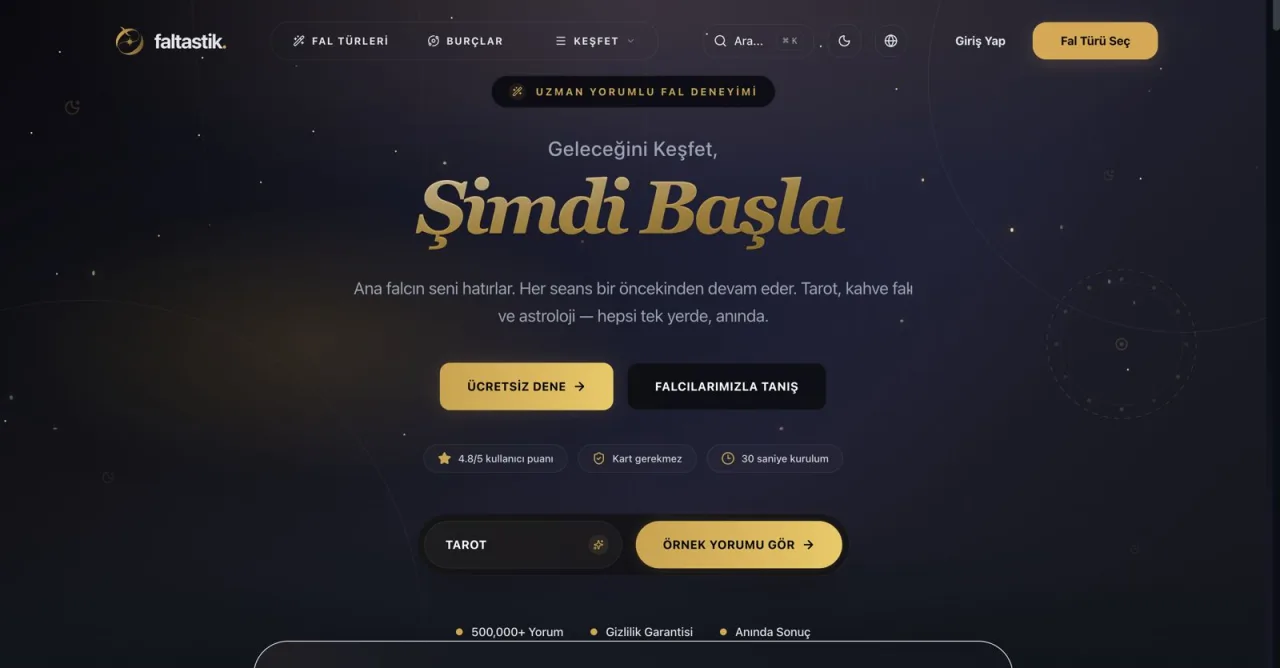
AI-integrated fortune telling and astrology platform across 6 languages.
Multilingual baby and child name meaning/origin platform with an SEO content engine.
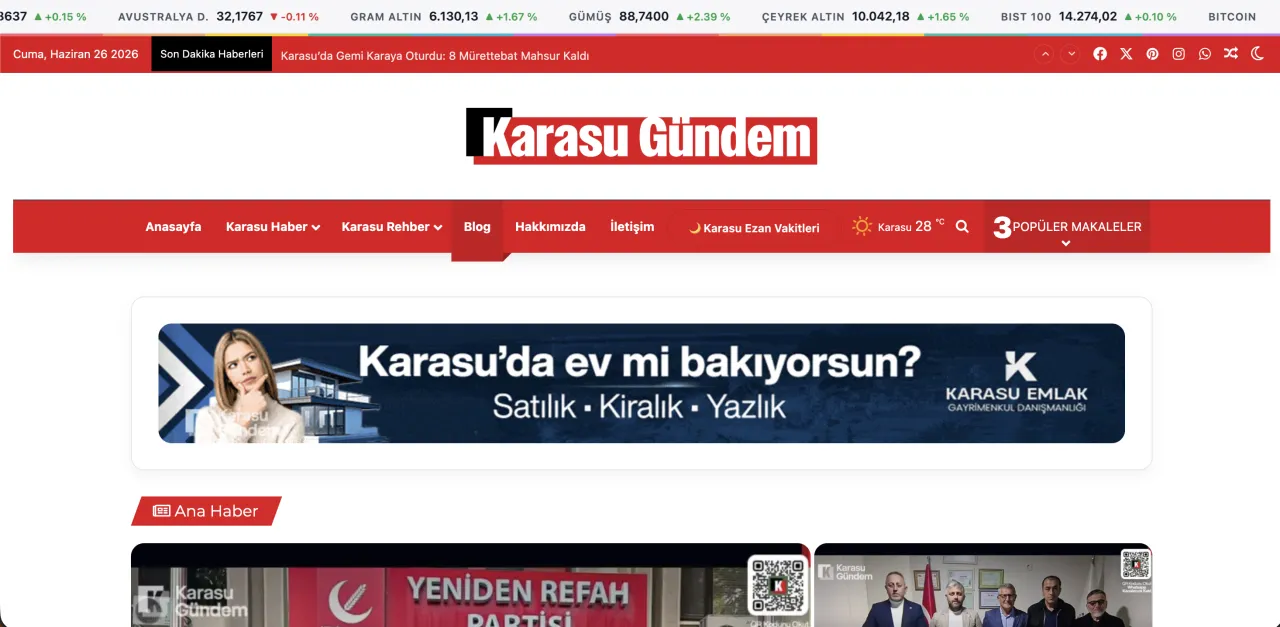
Local news portal for Karasu - live agenda, guide and weather under one roof.
We run the baseline benchmark for your category and send the results with a written plan. No obligation to continue.