
seoaraci.com
SEO tooling product we built; the measurement mindset behind our audits started here.
seoaraci.com
Read the case study →
AI Search · Audit and technical layer
AI search optimization is the technical and diagnostic side of being found by ChatGPT, Gemini, Perplexity, Copilot and Google AI Mode: can the crawlers reach your pages, is the important content in the HTML, do the structured data and entity signals say the same thing everywhere, and how often do answer engines actually mention you today. POI369 starts with an AI visibility audit, then fixes the technical layer and sets up monthly measurement.
Last reviewed September 14, 2026 · Reviewed by Ahmet Bulut
Most companies have no idea whether AI assistants mention them, and if they do, from which source. Guessing is expensive: teams rewrite pages that were never the problem while a robots rule silently blocks the one crawler that mattered. So the service starts with facts.
The audit answers four questions. Access: which search and AI crawlers can fetch the site, and what do they get back. Content: which pages carry the brand’s answers in server-rendered HTML, and which hide them behind scripts, tabs or images. Signals: do the Organization, Person, Service and Article data, the canonical URLs, hreflang and sitemap describe one consistent entity. Visibility: for a fixed set of prompts, how often is the brand mentioned or cited, where, and next to whom.
The output is a written report with a prioritised fix list. Some fixes take an hour. Some are a content program, which is where our GEO service continues.
robots.txt rules for Googlebot, Bingbot, GPTBot, OAI-SearchBot, ClaudeBot, PerplexityBot, Google-Extended and others. Content-Signal declarations. Firewall and bot-management rules that block by accident.
What a crawler receives without executing JavaScript, compared with what a browser shows. Missing headings, intros, service descriptions and Q&A get flagged.
Validity is the easy part. We check that the data is truthful, connected by @id, consistent with the visible page, and free of fabricated ratings or partner claims.
Self-canonical language versions, alternates that point only to pages that exist, lastmod values that change when content changes.
IndexNow for Bing and partners, sitemap hygiene, visible review dates. Bing’s AI Performance report is set up so AI-driven impressions become visible.
Thirty to fifty prompts, brand and category, run across ChatGPT, Gemini, Perplexity and Google AI Mode. Mention rate, citation rate, position, competitors, source URLs.
Patterns we see repeatedly. None of them are exotic; all of them cost visibility.
A bot-management preset or an old robots.txt denies GPTBot or PerplexityBot. The brand cannot be cited from a page that was never read.
The service description loads from an API after render. The crawler sees a shell. Moving that content into server-rendered HTML fixes it.
Brand name, legal name and directory listings disagree on casing, suffix or address. Engines hedge on ambiguous entities.
Organization data with a name and a logo and no description, founder, services or sameAs. Valid, and nearly useless.
Claims of expertise with no case studies, no author, no dated content. Engines prefer sources that show their work.
Crawl the site as the engines do. Compare delivered and rendered HTML. Review robots, sitemap, canonical, hreflang, structured data.
Run the prompt set across the four engines, record everything in a shared sheet. This becomes the reference for every later month.
Technical fixes shipped by us or handed to your developers with exact instructions. Entity data corrected. IndexNow and Bing AI Performance configured.
The benchmark runs again. You get the numbers, the deltas and a short note on what to do next. Continue into a GEO program if the content side needs work.
SEO tooling product we built; the measurement mindset behind our audits started here.
seoaraci.com
Read the case study →Real estate listings platform where local search visibility depends on crawlable structured pages at scale.
karasuemlak.net
Read the case study →Five-language SaaS product: an example of the canonical, hreflang and entity discipline we audit for.
poitim.com
Read the case study →The audit and fixes are a fixed-scope project. Monthly measurement is optional and priced separately. Many clients continue into the GEO program once the technical layer is clean.
Ranking is a good sign, since answer engines draw heavily on search results. But they also weigh entity clarity and whether they can lift a clean passage from your page. The audit tells you in two weeks whether anything is in the way.
Yes. The report lists each fix with the exact file, rule or field to change. We can also ship them ourselves on Next.js, WordPress and most common stacks.
Google Search Console, GA4, Bing Webmaster Tools with the AI Performance report, IndexNow, and a manual monthly benchmark across ChatGPT, Gemini, Perplexity and Google AI Mode. We do not scrape the engines in ways that break their terms.
Tool and automation platform for SEO and content teams.
Real estate listing platform for the Karasu region with an AI-powered content engine.
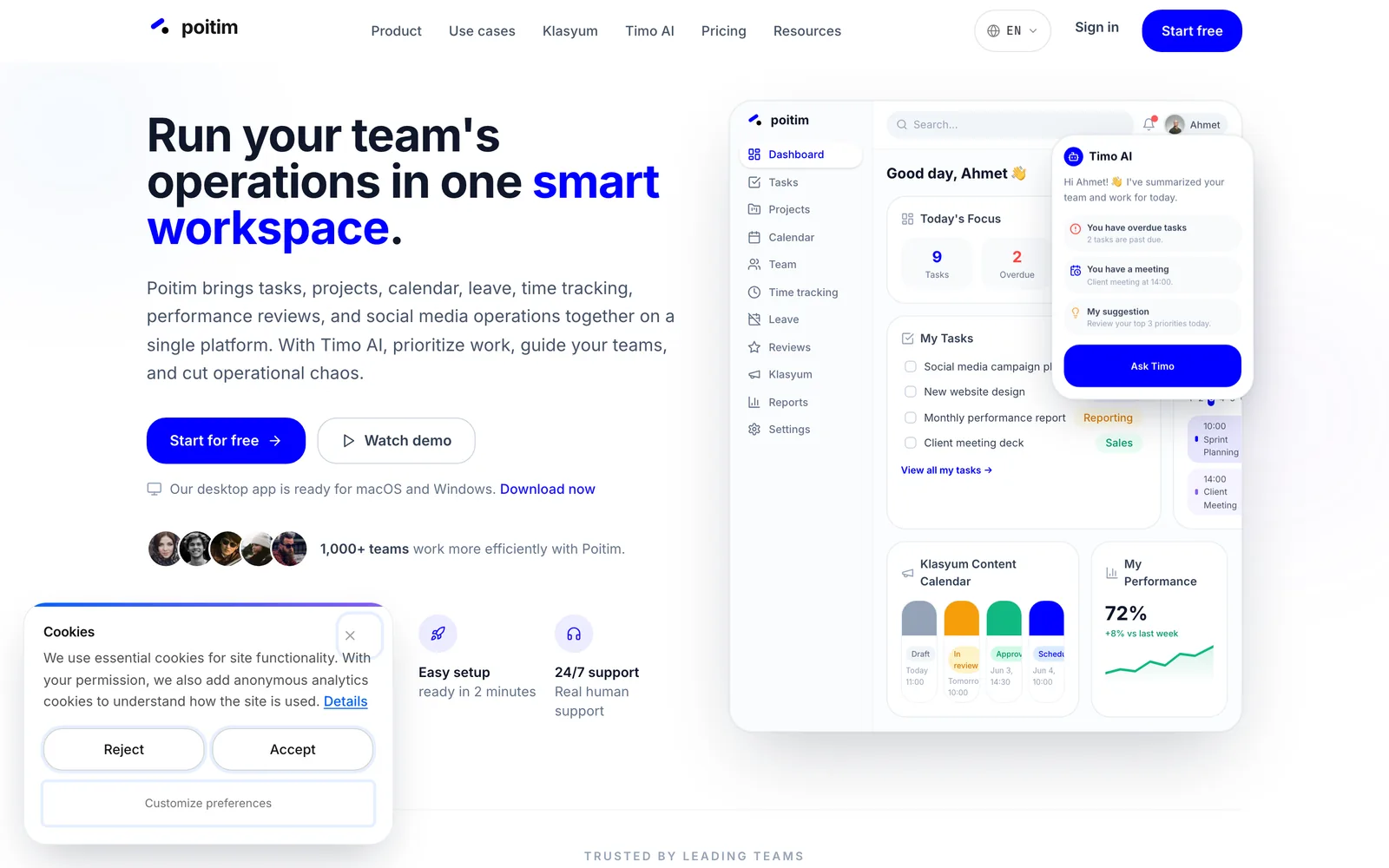
Global B2B team management platform, built end to end from brand identity to the desktop app, in five languages.
Send your domain and your main markets. We reply with the audit scope, timeline and a fixed price.